
By Aaron Devitt, Managing Partner & Co-Founder
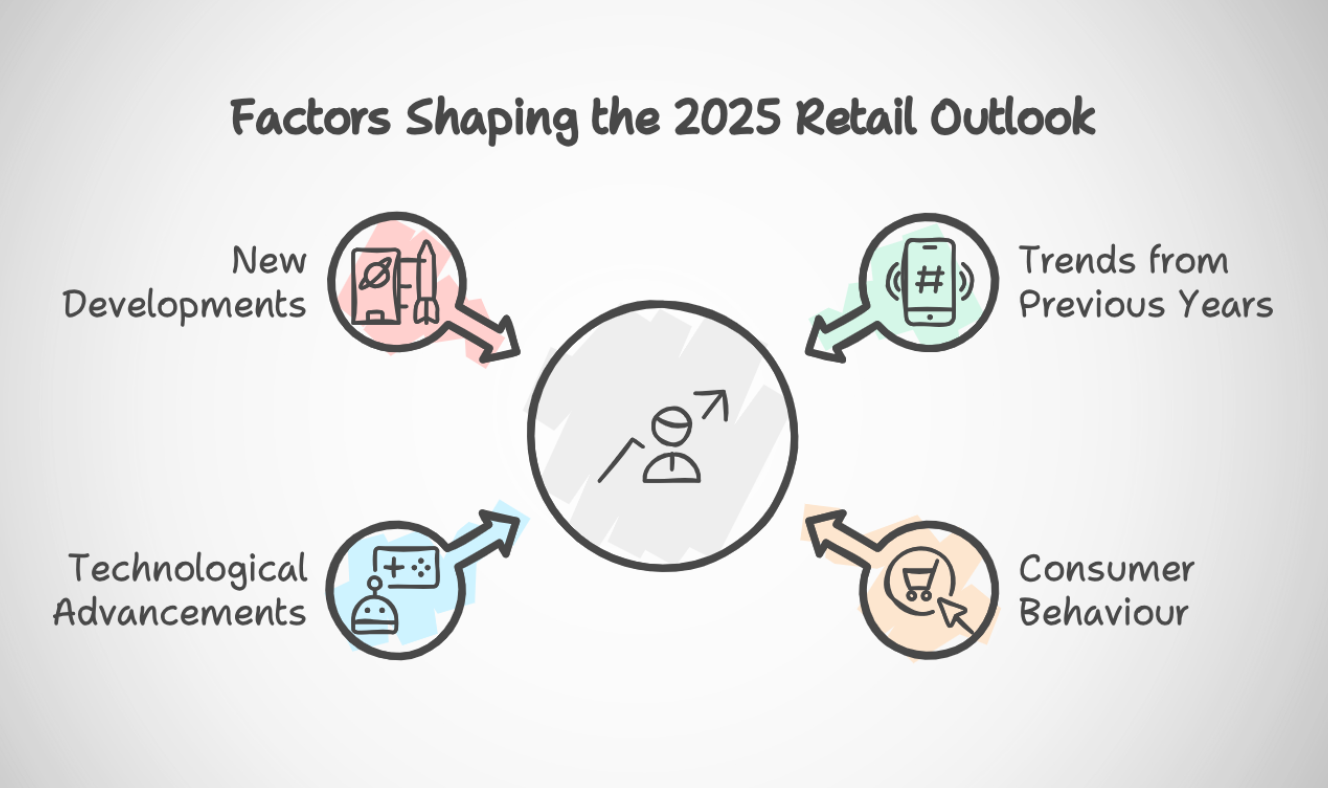
As summer fades and we approach the final months of 2024, I've been pondering the retail outlook for 2025. The UK's consumer electronics landscape continues to evolve rapidly. Existing trends are gaining momentum while new developments are emerging.
For years, technological advancements and changing consumer preferences have shaped the market. Now, we're witnessing an acceleration of these shifts. Moreover, novel sales channels are rising to prominence.
This article will examine the key trends influencing consumer electronics retail in the UK. First, we'll explore how long-standing changes in technology and consumer behaviour are picking up steam. Then, we'll spotlight the booming importance of social selling, especially through platforms like TikTok. Additionally, we'll discuss the growing influence of micro-influencers.
Our journey will cover various aspects of the industry:
-
The ongoing growth of smart home devices and wearables
-
The transformative impact of social commerce
-
The continued rollout of 5G technology
-
The increasing adoption of AR and VR in retail
I'll provide insights to help retailers navigate familiar and emerging challenges. We aim to equip UK retailers with the knowledge they need to adapt and thrive in this dynamic market.
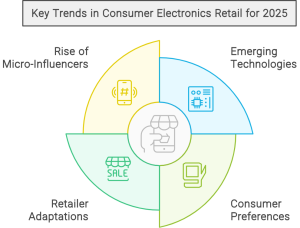
Retailers can better position themselves by understanding how these trends are accelerating and converging. Consequently, they'll be able to meet the evolving needs of UK consumers and capitalise on new opportunities, particularly in social selling and influencer marketing.
As we move into 2025, the retail landscape promises challenges and exciting possibilities. Let's explore how retailers can stay ahead in this rapidly changing environment.
Key Technologies and Product Categories
Several key product categories will drive significant growth in the UK consumer electronics market:
- Smart Home Devices:
- The UK smart home market is booming. Experts project growth from $78.3 billion in 2020 to $135.3 billion by 2025. As a result, products like smart speakers, thermostats, and security systems are becoming household essentials. This growth stems from AI and IoT advancements, which enable seamless integration and better home environment control.
- Wearables:
- Health and wellness concerns fuel robust expansion in the wearable technology market. Consequently, global wearable tech sales could hit $74.03 billion by 2026, representing a compound annual growth rate (CAGR) of 15.51% from 2021.
- 5G-Enabled Smartphones:
- As 5G networks rapidly expand, demand for 5G-enabled smartphones surges. By 2025, these networks may cover over one-third of the world's population. Moreover, 5G offers faster connectivity, lower latency, and enhanced performance.
- Augmented Reality (AR) and Virtual Reality (VR):
- AR and VR technologies are set to revolutionise consumer electronics. Projections show the AR/VR market growing from $16.8 billion in 2019 to $160 billion by late 2024. Furthermore, these immersive technologies attract a wide audience. From gamers to educators, many seek new ways to interact and learn.
Shifts in Consumer Behaviour and Preferences
Understanding evolving consumer behaviour is crucial for staying ahead:
-
Omnichannel Shopping:
-
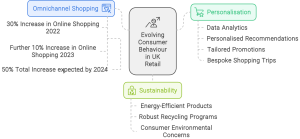
For some time now, consumers expect a seamless shopping experience across online and offline channels. Following the after-effects and changes in retail induced by the pandemic, the UK saw a 30% increase in online shopping in 2022. This shift has continued to grow, with online shopping further increasing by 10% in 2023 and projected to maintain a steady rise, reaching a total increase of 50% from pre-pandemic levels by 2024. This continued shift towards omnichannel retailing cannot be ignored; having robust retail analytics with actionable insights is paramount to maximise sales across physical retail stores and online.
-
-
Personalisation:
-
The demand for personalised shopping experiences continues to rise. Retailers that leverage data analytics to offer personalised product recommendations, tailored promotions, and bespoke shopping trips will likely achieve higher customer loyalty.
-
-
Sustainability:
-
Environmental consciousness is increasingly influencing purchasing decisions. Brands prioritising sustainability, such as energy-efficient products and robust recycling programs, resonate well with ecologically conscious consumers.
-
The Continued Impact of 5G and Telecommunications
The continued rollout of 5G technology is set to have a profound impact on the consumer electronics retail industry:
-
New Product Offerings:
-
The rollout of 5G will lead to more new product offerings. Beyond smartphones, expect advancements in smart home devices and wearables that leverage the power of faster connectivity and lower latency.
-
-
Enhanced In-Store Experiences:
-
Retailers will likely continue to leverage 5G to create immersive and interactive in-store experiences, integrating AR and VR for virtual try-ons, interactive product demos, and virtual store tours.
-
Emerging Sales and Distribution Channels
Sales and distribution channels are rapidly evolving, presenting new opportunities for retailers:
-
E-Commerce and Mobile Apps:
-
The growth of e-commerce and mobile app usage is undeniable. E-commerce revenues in the UK are expected to have an annual average growth rate of 12.6% by 2025, with a significant rise in mobile shopping.
-
-
Experiential Retail Spaces:
-
Physical stores are transforming into experiential hubs. Stores are becoming spaces where consumers can engage with products, attend workshops, and enjoy personalised service. This trend aligns with the broader move towards creating memorable and interactive in-store experiences.
-
-
Rise of Social Selling and Micro-Influencers:
-
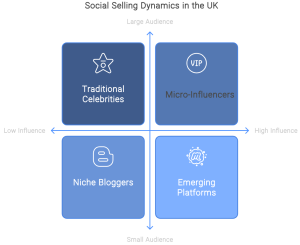
Social selling via platforms like TikTok has become a significant force in the retail landscape. In 2024, TikTok reported over one billion users worldwide, with UK-specific users surpassing 17 million. Social commerce revenue from platforms like TikTok is projected to reach £5 billion in the UK by the end of 2024. Micro-influencers on TikTok, those with follower counts ranging from 10,000 to 100,000, play a pivotal role in driving consumer purchases. They provide authentic reviews and recommendations, bridging the gap between brands and consumers in a more relatable manner. Their influence is such that 70% of Gen Z’s in the UK claim to have purchased a product based on a TikTok recommendation.
-
-
Conclusion
The consumer electronics retail landscape in the UK is set for an exciting and transformative journey towards 2025. Retailers can stay ahead in a dynamic market by embracing emerging technologies, understanding shifting consumer preferences, and leveraging new sales channels. Staying attuned to these trends will be vital to thriving in the ever-evolving consumer electronics landscape as we navigate these changes.
Follow us on LinkedIn for our latest news.